Louis XIV
King of France · 1643-1715 · born on 5 September 1638, died on 1 September 1715
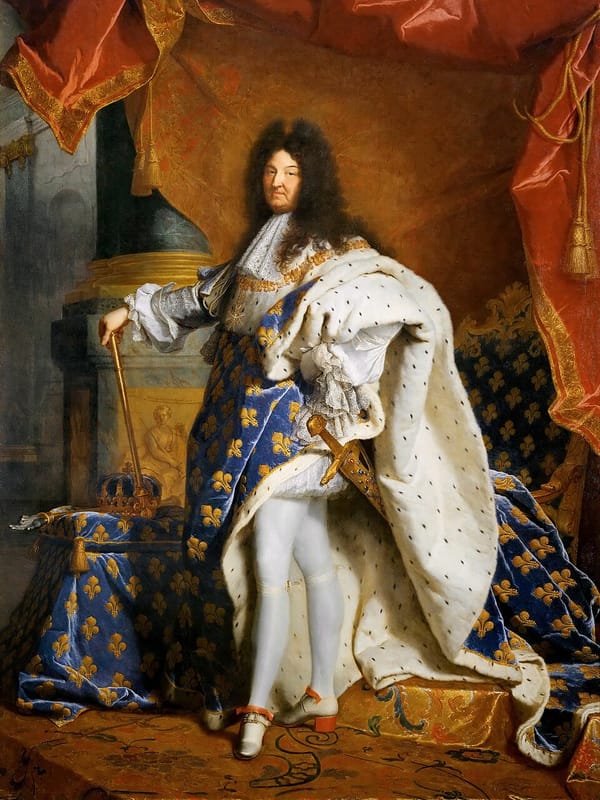
King at four and a half, Louis XIV experienced the Fronde in his youth, a memory that fuelled his desire for absolutism. On Mazarin’s death (1661), he governed alone, without a first minister. The saying “L’État, c’est moi” (“I am the state”) is attributed to him but is not authenticated.
He installed his court at Versailles, where he kept the high nobility under his control, and embodied a divine-right monarchy. With Colbert, he developed the economy, the manufactures and the navy; the arts (Molière, Racine, Le Brun) radiated across Europe.
His wars (of Holland, of the League of Augsburg, of the Spanish Succession) brought France to its apogee but exhausted the country; the revocation of the Edict of Nantes (1685) forced the Protestants into exile. The Sun King, who reigned for seventy-two years, died at Versailles in 1715, leaving a France that was powerful, admired and crippled with debt.
Key dates
- 1661: Start of the great works at Versailles
- 1666: Founding of the Académie des sciences
- 1680: Founding of the Comédie-Française
- 1685: Revocation of the Edict of Nantes
- 1715: Death of Louis XIV
In the tree of power
- Era: Bourbons
- Predecessor: Louis XIII (1610-1643)
- Successor: Louis XV (1715-1774)
- Queen: Marie-Thérèse d'Autriche (1660-1683)