Charlemagne
King of the Franks, then Western Emperor · 768-814 · born on 2 April 748, died on 28 January 814
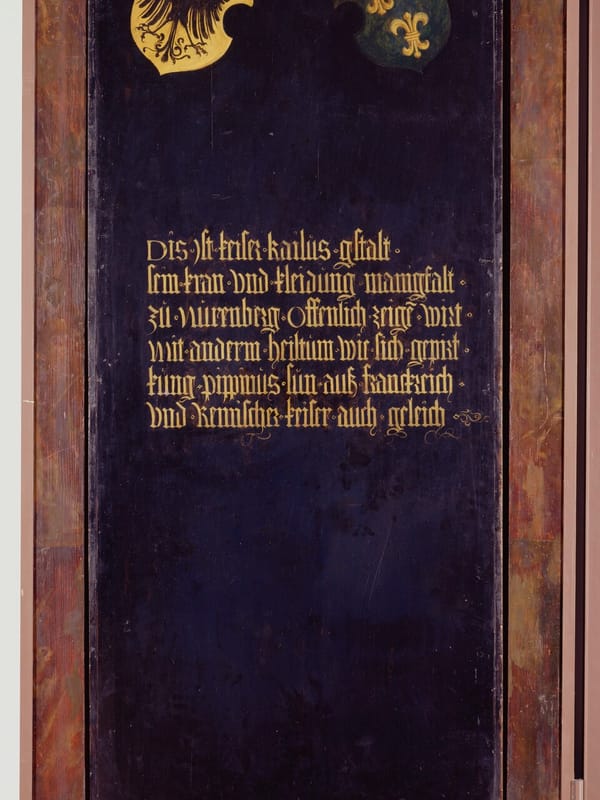
Co-heir with his brother Carloman in 768, Charlemagne became sole king of the Franks in 771. He pursued a systematic policy of conquest: the Lombard kingdom of Italy (774), Saxony, Bavaria and the territories beyond the Pyrenees up to the Ebro (Spanish March). The Frankish empire then became the largest power in Western Europe.
On 25 December 800, he was crowned emperor of the West by Pope Leo III in Rome, in St. Peter’s basilica. Charlemagne surrounded himself with intellectuals (Alcuin) and revived the schools and the copying of manuscripts: this was the “Carolingian renaissance”, of which the Caroline minuscule script is the symbol. He made Aachen his main imperial residence.
When he died in 814, the empire passed to his son Louis the Pious, then was divided among his grandsons by the Treaty of Verdun (843). West Francia, awarded to Charles the Bald, foreshadowed the future kingdom of France. Charlemagne embodies the myth of a reunified Christian West.
Key dates
- 768: Accession of Charlemagne
- 800: Coronation of Charlemagne
In the tree of power
- Era: Carolingians
- Predecessor: Pépin le Bref (751-768)
- Successor: Louis Ier le Pieux (814-840)