Charles VII le Victorieux
King of France · 1422-1461 · born on 22 February 1403, died on 22 July 1461
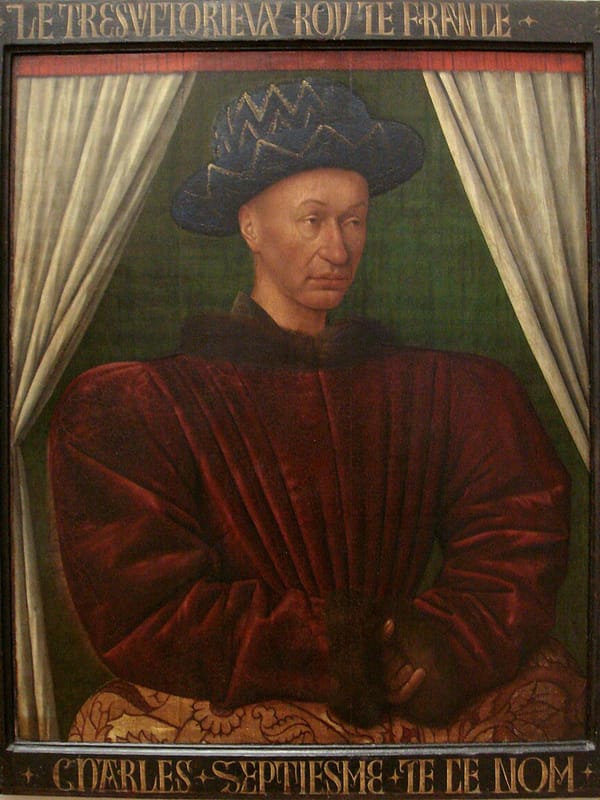
A contested dauphin, often caricatured as a weak prince, Charles VII was anointed at Reims in 1429 thanks to Joan of Arc, who made him the king of legitimacy. He then gradually recovered his kingdom, largely occupied by the English.
The reconquest culminated with the battle of Castillon (1453), which ended the Hundred Years’ War: the English lost all their continental possessions except Calais, which was to remain English until 1558. Charles VII rebuilt a state by creating a standing army (the compagnies d’ordonnance, 1445) and a regular direct tax, the taille.
His reign laid the foundations of modern France: the Pragmatic Sanction of Bourges (1438), which framed the Church of France, and financial and administrative reorganization. The nickname “the Victorious” says it all: he saved the kingdom.
Key dates
- 1429: Coronation of Charles VII
- 1453: End of the Hundred Years’ War
In the tree of power
- Era: Valois
- Predecessor: Charles VI le Fou (1380-1422)
- Successor: Louis XI (1461-1483)